MY TURN: Science on Alaskan fisheries must adapt — not disappear
Published 11:30 am Sunday, May 17, 2026
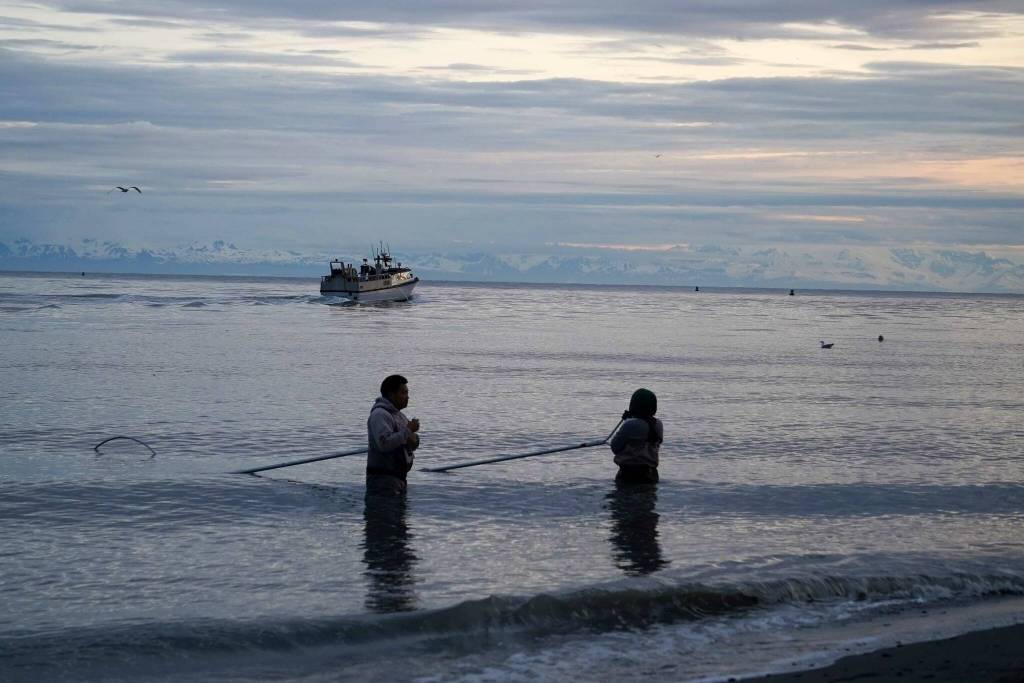
Alaskans are right to be concerned about the health of our oceans and fisheries. Salmon declines across parts of the state are painful and deeply disruptive, especially for rural and Indigenous communities that depend on salmon for food security, cultural continuity and economic opportunity. The collapse of Bering Sea crab stocks and declines in cod have raised difficult questions not just for fishermen, but for scientists and fishery managers as well.
Those concerns deserve serious discussion and serious solutions.
But increasingly, Alaska’s fisheries debate is drifting away from science-based problem-solving and toward campaign-season slogans. That is a mistake, particularly at a time when changing ocean conditions demand more scientific understanding, not less.
In recent months, some political candidates and activists have framed trawl fisheries as the central cause of Alaska’s fishery challenges and proposed sweeping restrictions or outright bans as the answer. But ecosystems as vast and dynamic as the Bering Sea and Gulf of Alaska do not operate according to bumper-sticker politics.
The scientific reality is far more complicated.
Climate shifts, warming ocean temperatures, changing food availability, freshwater habitat conditions, international harvest pressures and predator-prey dynamics all influence fish survival and abundance. Scientists have spent decades studying these changes, and while there is ongoing debate over the relative role of different factors, one thing is clear: Alaska’s fisheries are being shaped by broader environmental changes that extend far beyond any single fleet or fishery.
That does not mean fisheries management should remain static. In fact, the opposite is true.
Science-based management is valuable precisely because it can adapt as conditions change. Over the past decade, fisheries managers have increasingly adopted ecosystem-based approaches, real-time monitoring tools, genetic stock identification and targeted hotspot closures designed to improve sustainability and reduce impacts on non-target species.
That evolution matters.
The Eastern Bering Sea pollock fishery, for example, is among the most intensively monitored fisheries in the world. Federal managers working through the North Pacific Fishery Management Council and implemented by NOAA Fisheries regularly adjust management measures based on updated science, environmental conditions and observed fishery impacts.
Importantly, science-based management does not mean refusing to change. It means changing carefully, transparently, and based on measurable outcomes rather than political momentum.
That distinction is critical.
Alaska has spent decades building a fisheries management system recognized globally for sustainability and accountability. It is not perfect, and no serious person argues otherwise. There is always room for improvement in bycatch reduction, habitat protection, and ecosystem understanding. But abandoning scientific management in favor of emotionally charged election-cycle policymaking would not strengthen Alaska’s fisheries — it would weaken public trust in the very institutions designed to protect them.
Reasonable people can disagree about what additional management actions may be appropriate as our oceans continue to change. Those are conversations worth having. But they should happen through transparent scientific and regulatory processes, not social media campaigns or political litmus tests.
The answer to changing oceans is not less science. It is better science, better data and management systems capable of adapting to new realities while still providing stability for Alaska’s fishing communities and coastal economies.
Alaska’s fisheries face serious challenges. Meeting them will require humility, flexibility, and a willingness to follow the evidence — even when the answers are more complicated than campaign slogans allow.
If we want sustainable fisheries for future generations, science must continue to evolve. It cannot simply be abandoned when the answers become politically inconvenient.
Rick Whitbeck is a veteran of resource development advocacy and a 40-year Alaskan by choice. He currently serves as the director of strategic engagement for CVRF, a CDQ organization for 20 Y-K area villages, as well as the executive director of The Truth, a non-profit focused on advocacy of the Alaskan pollock fishery. The views here are his own and not his employer’s.